You can claim your Japan pension refund on your own. Many people do. This page shows you exactly how, where people get stuck, and when a flat fee of ¥15,000 is worth paying instead. We will tell you honestly if you do not need us.
Check what you can claim → Free check. Flat fee, agreed in writing before we start. Never a percentage of your refund.
Can you claim the Japan pension refund yourself?
Yes. The Japan Pension Service publishes the lump-sum withdrawal payment claim form in several languages, and anyone who qualifies can fill it in and post it themselves.
The pension claim is the easier half. The harder half is the 20.42% tax that comes off the payment, which we cover below.
Who can get a Japan pension refund (Dattai Ichijikin)?
You can claim if you are not a Japanese national, paid into the pension for 6 months or more, no longer have an address in Japan, and were never entitled to a Japanese pension, including disability allowance. You must claim within 2 years of the date you no longer had an address in Japan, according to the Japan Pension Service claim form.
This works for both kokumin nenkin (National Pension) and kosei nenkin (Employees’ Pension). If you already left and are not sure where you stand, read our full eligibility checklist or the 2-year deadline explained.
How many years of pension are paid back?
If your last contribution month was April 2021 or later, up to 60 months (5 years) are counted. If it was March 2021 or earlier, the cap is 36 months (3 years), as set out on the official claim form.
If you are close to 10 years in total, slow down before you claim. Read why claiming too soon can cost you more. To see a rough number for your own case, use our pension refund estimator.
What do you need to send with the lump-sum withdrawal payment claim?
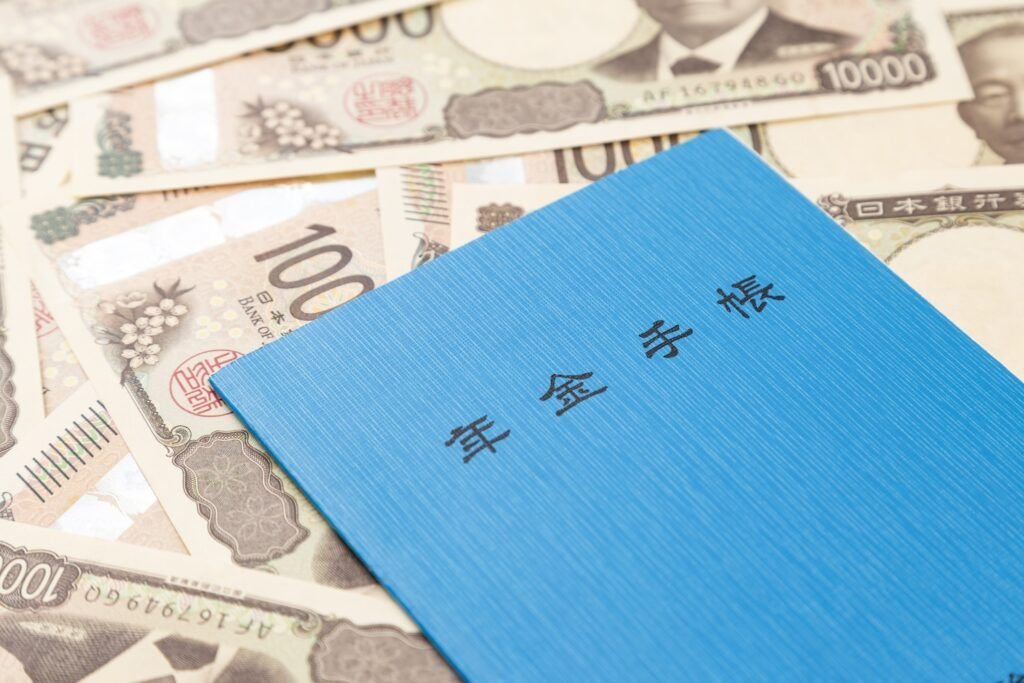
You need four things: a copy of your passport, proof you no longer have an address in Japan, your bank details in your own name, and a document showing your basic pension number, such as your pension handbook. The full list is on the Japan Pension Service form.
The proof of address is not needed if you filed your moving-out notice at the city office before you left. Lost your pension book, or your pension number? You can still claim. If you paid into the pension for at least 6 months, we can trace your basic pension number from your employer records and your residence card, even if you have lost all your original documents. It adds about two weeks. Leaving soon? Take these 4 photos before you go.
Why is 20.42% taken off, and how do you get it back?
When a non-resident is paid the Employees’ Pension lump-sum, income tax at 20.42% is withheld before the money reaches your bank. You can claim it back by filing a tax return through a tax agent in Japan, using the Notice of the Lump-sum Withdrawal Payment (Entitlement) the pension service sends you.
This is two claims, not one. The pension office pays about 79.58%. The other 20.42% stays with the tax office until someone in Japan files for it. We explain the whole process in what the 20.42% actually is.
Where do people doing it themselves get stuck?
The most common mistake we see is leaving Japan without cancelling your resident address. The second is leaving a job early without confirming that the employment contract has ended, which gets the claim rejected.
These are the four mistakes we see again and again:
- Not cancelling your resident address before you fly. Many people think it is cancelled automatically when they leave. That only happens if you leave when your visa expires, as most technical intern trainees do. If you hold Tokutei Gino (SSW), engineer or specialist status and leave while your visa is still valid, go to City Hall (Shiyakusho), tell them you are moving out of Japan for good, and close your health insurance too. A moving-abroad notice is not the same as a normal change of address. If you file a normal change of address by mistake, your address stays on record much longer, even after your visa runs out, and you cannot claim until it is gone.
- Leaving a job early without confirming the contract has ended. If you leave while your visa is still valid and do not confirm the end of your employment with the company, the company may not finalise it straight away. If the pension office reviews your claim while the contract is still active on paper, it rejects the claim.
- Thinking you must leave Japan for good. You do not. If you have left Japan, have no resident address there, and have stopped paying into Nenkin and health insurance, you can claim even if you are only home for a 1 to 2 month break. If you plan to come back to the same company, you need its approval to suspend your pension and insurance enrollment properly. Also check the re-entry permit trap first.
- Sending an incomplete file. The claim needs more than the form and the blue pension book. Every required document has to be there and every section filled in correctly. One missing detail sends the whole file back.
I flew home in March and thought the pension was the end of it. They filed the tax part too and a second payment came in September. I did not know that money existed.
Dinh, factory worker, 3 years in Gunma
How do dishonest agents keep your 20.42%?
The 20.42% refund is paid to your tax agent in Japan, so a dishonest agent can legally receive it and simply not pass it on. Once they have your documents, getting that money back is close to impossible, so the time to check is before you sign.
These are the three patterns we see:
- A very low fee to hook you. The cheap fee is bait. What the agent wants is your paperwork. Your first payment, the 79.58%, still lands in your own account as normal, so nothing looks wrong. The 20.42% tax refund is what they are after. Ask: exactly how the process works, and where their registered business address in Japan is.
- Refusing to show you the Notice of Entitlement. This notice from the pension service shows exactly how much you are owed. An agent who will not share it usually plans to keep part of the 20.42% without you noticing. Ask: for a copy of the notice as soon as it arrives.
- Edited payment notices. Some agents change the numbers on the notice so they can take money off the top. You can check the amount with the standard formula, or by calling the tax office and the pension office. That is hard without good Japanese, so many people take whatever arrives and never check. Ask: for the original notice, not a photo someone has passed on.
We send you a copy of every form we file, in your language, on the day we send it.
Before you trust anyone with your refund, read 5 things an honest agent will never ask for.
What does it cost to have Nenkin Kantan file it?
¥15,000 flat for the pension claim, ¥10,000 for the 20.42% tax claim, or ¥20,000 for both together. The eligibility check is free, and the fee never changes after you agree to it.
| Doing it yourself | Nenkin Kantan | |
|---|---|---|
| Fee | ¥0 | ¥15,000 pension claim · ¥10,000 tax claim · ¥20,000 both |
| The 20.42% tax claim | You need your own tax agent in Japan | We register as your tax representative and file it |
| Forms and offices | You fill in the forms and deal with the offices | We fill in the Japanese forms and deal with the offices |
| Lost pension book | You trace the number yourself | We trace it (about 2 extra weeks) |
| Language | Forms and offices | English, Tagalog, Vietnamese or Nepali |
| If a payment stalls | You chase it | We chase it and tell you what is happening |
Postage and bank transfer costs are passed on at cost and shown on your invoice. Nothing else is added. See the full price list.
How long does the Japan pension refund take with us?
The pension payment usually lands 3 to 4 months after we file. The tax refund usually follows 1 to 2 months after we file the tax claim.
We file within 1 to 2 weeks of receiving your documents. If a payment stalls, we chase it and tell you what is happening.
What happens after you send us your photos?
We reply within one working day and send a written quote within 2 days. Then we file, and you get paid.
- Send photos (Day 1). Your pension book, passport pages and bank details, on LINE or email. No office visit needed.
- We check and quote (within 2 days). What you can claim, roughly how much to expect, and the exact fee. In writing, before you agree to anything.
- We file (1 to 2 weeks). We fill in the Japanese forms, sign as your tax representative, and submit to the pension service and the tax office. Every form is copied to you on the day we send it.
- You get paid (3 to 4 months). The pension office pays your home bank account. The tax refund follows.
The same person handles your case from the first message until the last payment clears. Your original documents go back to you by tracked post.
Is paying ¥15,000 worth it, or should you do it yourself?
If you only paid into the National Pension, the 20.42% tax applies to the Employees’ Pension payment, so there is no tax claim to make and doing it yourself is realistic. If you paid Employees’ Pension through your job, the tax claim is where most of the work and much of the money is, and that is where a tax representative earns the fee.
Many people try to save money by filing the 79.58% pension claim themselves and only paying someone for the 20.42% tax claim. Once you add international postage and phone calls to chase the offices yourself, that can cost more than one flat fee for both claims.
If you cannot claim, we say so on day one and charge you nothing. We would rather lose the job than take a fee for a dead claim.
Not sure which applies to you? Ask us.
Send us a photo of your pension book and tell us when you left Japan. We will tell you what is claimable and what it costs. No charge for the answer.
Nenkin Kantan (KICHI LLC, registered in Japan)
2 Chome-20-30 Matoba, Kawagoe, Saitama 350-1101, Japan
Phone: 080 9435 2242 · LINE: @946nfvyk · contact@nenkinkantan.com
Monday to Friday, 9:30 to 18:00 JST. Saturday by appointment.