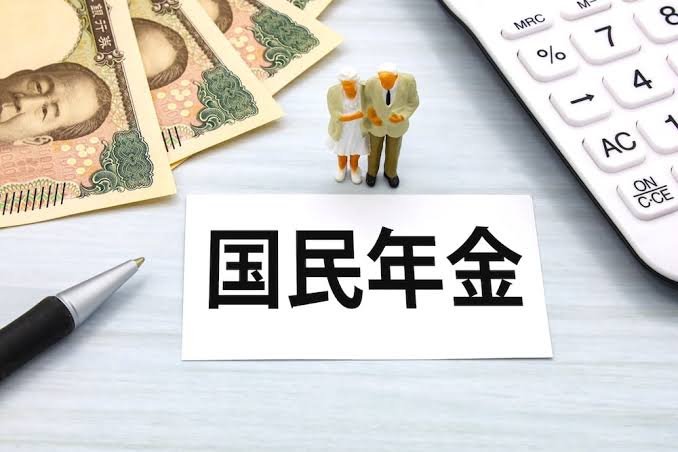
There are two kinds of pension in Japan for foreigners who work here: kosei nenkin, which your company takes from your salary, and kokumin nenkin, which you pay yourself. If you are a technical intern trainee or a Specified Skilled Worker (SSW) employed by a company, you are almost always paying kosei nenkin. This page explains the difference, how your deduction is worked out, which month it comes out, and how to check it is correct.
Which pension do most foreign workers in Japan pay?
Most foreign workers, including technical intern trainees and SSW visa holders, pay kosei nenkin (Employees’ Pension Insurance) through their employer. The Japan Pension Service says basically all workers at a covered workplace, “regardless of nationality”, must be enrolled.
You only pay kokumin nenkin (National Pension) yourself when you are not covered through a job. That usually means the gap between two jobs, or time in Japan as a student or self-employed.
What is the difference between kokumin nenkin and kosei nenkin?
Kosei nenkin is linked to your salary and shared with your employer, who takes your half from your pay. Kokumin nenkin is a fixed monthly amount that you pay in full yourself, by payment slip, bank transfer or app.
| Kosei nenkin (Employees’ Pension) | Kokumin nenkin (National Pension) | |
|---|---|---|
| Who pays it | Workers at covered companies | Residents aged 20 to 59 not covered through a job |
| How much | 18.3% of your standard monthly pay, half paid by your employer | A fixed ¥17,920 a month (April 2026 to March 2027) |
| How it is paid | Taken from your salary by your company | You pay it yourself |
| When | Last month’s amount comes out of this month’s salary | Each month’s amount is due by the end of the next month |
| Shown on your payslip as | 厚生年金 (kosei nenkin) | Not on your payslip |
The figures above come from the Japan Pension Service pages linked in the sections below. Note that the ¥17,920 for kokumin nenkin applies only from April 2026 to March 2027: the National Pension amount is reset every April, so check the current figure if you are reading this later.
Who has to pay kosei nenkin?
Any company or factory with 5 or more workers, and any corporation (hojin), is a covered workplace, and its workers must be enrolled whatever their nationality. Your employer has to apply to enroll you within 5 days of you starting work.
Part-time workers are also covered if they work at least three-quarters of a full-time schedule, or meet all four conditions on the same page, including 20 hours or more a week. If you are a trainee or SSW worker on a normal full-time contract, this applies to you.
When do you pay kokumin nenkin instead?
All residents of Japan aged 20 to 59, regardless of nationality, must be in the pension system, so if no company enrolls you, you pay kokumin nenkin yourself. For April 2026 to March 2027 it is ¥17,920 a month, and each month’s payment is due by the end of the following month.
The most common time this happens is between jobs. If you leave one company and start the next a month later, that month is kokumin nenkin. You pay it with the payment slip the Japan Pension Service sends you, by bank transfer, card, or a smartphone app.
How is kosei nenkin calculated?
Your monthly kosei nenkin is your standard monthly pay multiplied by 18.3%, and you pay half of that. The Japan Pension Service payment guide uses the 18.3% rate and says the amount taken from the worker is half.
For example, if your standard monthly pay is set at ¥220,000, the total is ¥40,260 a month. You pay ¥20,130, and your company pays the other ¥20,130.
Note: ¥220,000 is a round figure used to keep the example simple. Your real standard monthly pay is not your exact salary. It is set in fixed bands, so your actual deduction will be slightly different.
What counts as your standard monthly pay?
Your standard monthly pay is worked out from what you were paid in April, May and June, and it sets your deduction from September to the next August. It includes your allowances, such as overtime and commuting, not just your basic salary.
This surprises a lot of workers. If you did a lot of overtime in April to June, your pension deduction can go up from September, even if your basic salary did not change. When you first join a company, the amount is based on the pay your employer expects to give you. If your pay changes a lot later, by two or more levels, the amount can be revised from the fourth month.
When is pension taken from your salary?
Kosei nenkin is taken one month behind: the pension for April comes out of the salary paid in May. The Japan Pension Service payment guide gives exactly this example.
So your first payslip at a new job often has no pension deduction yet, and your last payslip may still have one. That is normal, not a mistake.
How can you check your pension is deducted correctly?
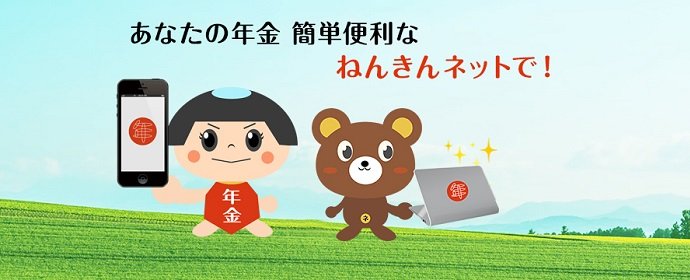
Do not only calculate it from your salary. Check the record the pension office itself holds, on Nenkin Net or in the Nenkin Teikibin letter it posts to you every year.
Most workers who ask us about their deduction do not know how it is calculated, and want to know if their company is taking the right amount. Working it out from your salary only gets you close, because your standard monthly pay includes allowances and is set in bands. The exact amount the pension office is charging is in its own records. You can see them on Nenkin Net, the Japan Pension Service’s online service, where you register with your My Number Card or a user ID.
Or check your Nenkin Teikibin, the pension record letter that arrives in your birthday month each year at your registered address.
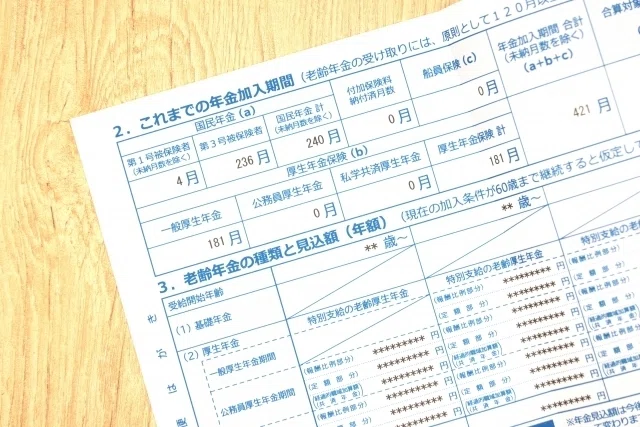
Compare what you find there with the 厚生年金 line on your payslip. If they do not match, ask your company first.
What happens if you do not pay pension in Japan?
For SSW workers, not completing your pension procedures may affect changing or extending your residence status, according to the Japan Pension Service. Unpaid months also do not count toward your refund, which needs 6 months or more of paid pension.
The same Japan Pension Service leaflet says it can also affect an application for permanent residency. When you leave Japan, those 6 paid months are the minimum to claim the Japan pension refund, and only paid months count toward how much you get back.
Paid kosei nenkin and leaving Japan soon? You can get most of it back. Use our pension refund estimator to see roughly how much, or send us a photo of your pension book and we will tell you, for free.
Written by the Nenkin Kantan team. Our founder spent six years translating for foreign workers in Japan and helping them through tax and Nenkin procedures. About us.