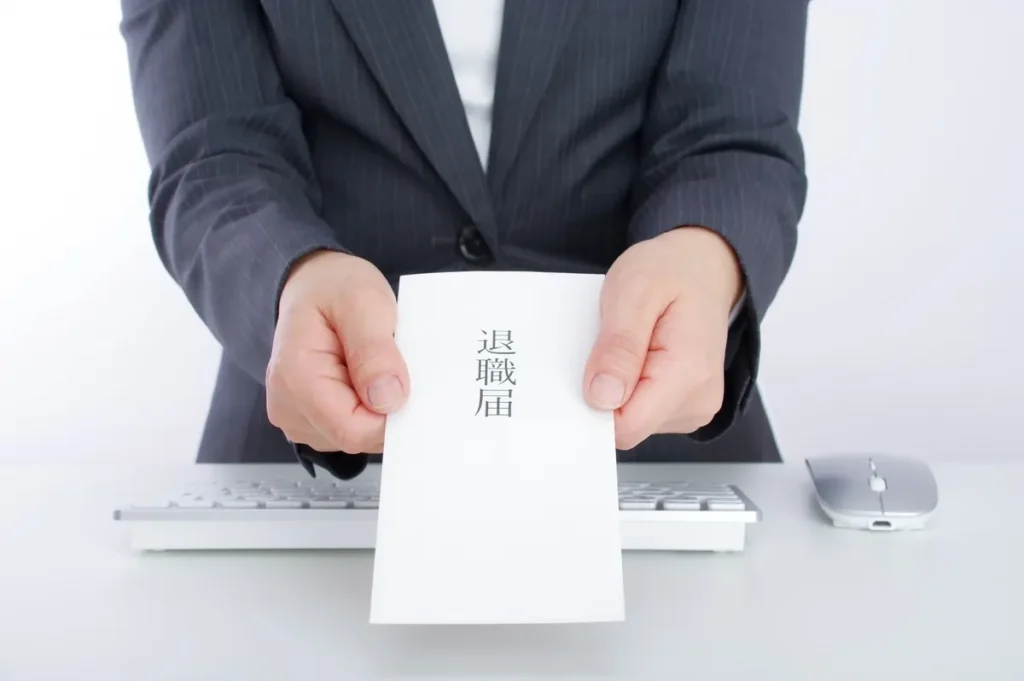
If you are changing jobs in Japan, your pension does not restart from zero. But what happens next depends on one thing: whether your new job starts right after your old one, or whether there is a gap in between. This page explains both cases, and what to do so no month of your contribution record gets lost in the move.
If you start your new job right away
If you leave one company and start at a new covered workplace without a break, your kosei nenkin enrollment continues without interruption. The Japan Pension Service confirms this: if you are re-employed right away at a workplace covered by Employees’ Pension Insurance, you stay enrolled in principle, with no gap in your record.
Your old employer and your new employer each file paperwork with the pension office. You do not need to do anything extra in this case, but it is still worth checking your payslip at the new job to confirm the 厚生年金 deduction appears from your first full month there. Payroll departments sometimes take a cycle or two to set up a new employee correctly, and a late start to the deduction can look like a missing month if nobody checks.
If there is a gap between jobs
If a month or more passes between your last day at one job and your first day at the next, your Employees’ Pension coverage ends when your old job ends. During that gap, you are required to enroll in kokumin nenkin, the National Pension, yourself, and pay the fixed monthly amount directly.
This step is easy to miss, especially when someone is job hunting, waiting for a new contract to start, or going through a visa process that takes longer than expected. Nobody sends you a reminder. You have to go to your city or ward office and register yourself, usually within 14 days of your previous coverage ending. If you skip it, that gap becomes an unpaid period on your pension record, which can affect both your future eligibility and the final number used in your lump-sum refund calculation later.
A concrete example
Say you worked at Company A for 2 years, then had a 2-month gap before starting at Company B, where you worked for another 3 years. If you registered for kokumin nenkin during those 2 months and paid on time, your total paid contribution period is close to 5 years and 2 months. If you did not register, those 2 months simply do not count, and your total paid period is 5 years, with a 2-month unpaid gap sitting quietly in your record that nobody flags for you.
The difference might look small, but contribution months are counted in bands when your lump-sum is calculated, so a short gap can sometimes be the difference between one payment band and the next.
If you change jobs more than once
Many technical intern trainees and SSW workers change employer two or three times over several years in Japan, sometimes because of how placement agencies work, sometimes by choice. Each change is its own small decision point: did the new job start right away, or was there a gap. Treat every transition the same way, and check it the same way, rather than assuming the first job change went fine so the rest did too.
Why this matters for your eventual refund
Every month counted toward your pension lump-sum needs to be a paid month. An unpaid gap between jobs does not count toward your total, and it will not appear as a contribution when the Japan Pension Service calculates what you are owed. If you changed jobs more than once during your time in Japan, it is worth checking your full record rather than assuming every month was automatically covered. This matters even more if your total time in Japan is approaching a key band, since one missing gap can shift your result more than people expect.
How to check your own record
Do not guess based on memory or based on what your payslips show. Check your actual history on Nenkin Net, the Japan Pension Service’s online portal, or in the Nenkin Teikibin letter sent to your registered address every year in your birthday month. Both show your enrollment periods month by month, including any gaps, and both are more reliable than trying to reconstruct your history from old payslips, especially if you worked at more than one company.
In short
- Changing jobs without a break usually means your kosei nenkin continues with no gap, though it is still worth checking your first payslip at the new job.
- A gap of a month or more between jobs means you must register for kokumin nenkin yourself during that time, usually within 14 days.
- An unpaid gap does not count toward your pension lump-sum later, and it will not appear as a contribution on your record.
- If you changed jobs more than once, check each transition the same way rather than assuming.
- Nenkin Net or your Nenkin Teikibin show your real contribution history, which is more reliable than piecing it together from payslips.
Changed jobs a few times and not sure how your total adds up? Use our pension refund estimator to get a rough number, or send us your work history and we will check it for free.