Once a year, a letter called the Nenkin Teikibin arrives at your registered Japan address. Most foreign workers open it, cannot read the Japanese, and put it in a drawer. This is a mistake, because it is the most reliable record you have of what you have actually paid into Japan’s pension system. Here is what it says, and why it is worth five minutes of your time.
What the Nenkin Teikibin is
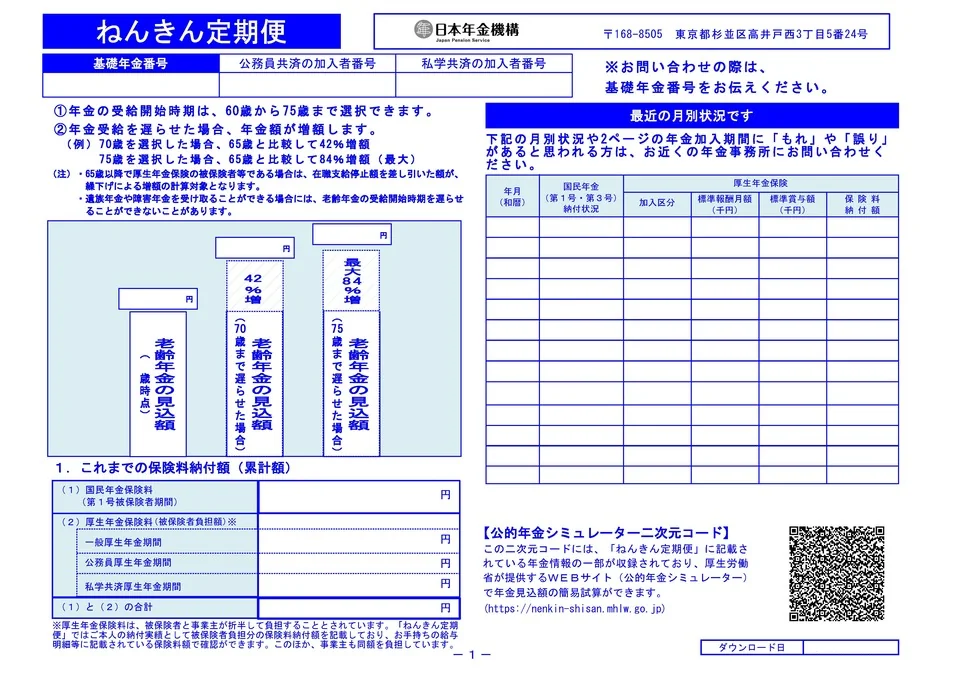
The Nenkin Teikibin is a pension record letter sent by the Japan Pension Service to every enrolled person, arriving each year in your birthday month, at the address registered to your pension record. It is not a bill, and you do not need to pay anything or reply to it. It is a summary of your contribution history so far, sent automatically, whether you ask for it or not.
If you have moved since you last updated your address with the pension office, this letter may be going to an old address without you knowing. It is worth confirming your registered address is correct, especially if you have changed apartments or dormitories during your time in Japan.
What it actually shows
The letter lists your enrollment periods month by month, split between kosei nenkin and kokumin nenkin if you had both at different times. It also shows your standard monthly remuneration for each period under kosei nenkin, which is the figure used later to calculate your lump-sum refund. This number is not simply your salary. It is a banded figure the pension office assigns based on your average pay, including overtime and most allowances, reviewed periodically through the year.
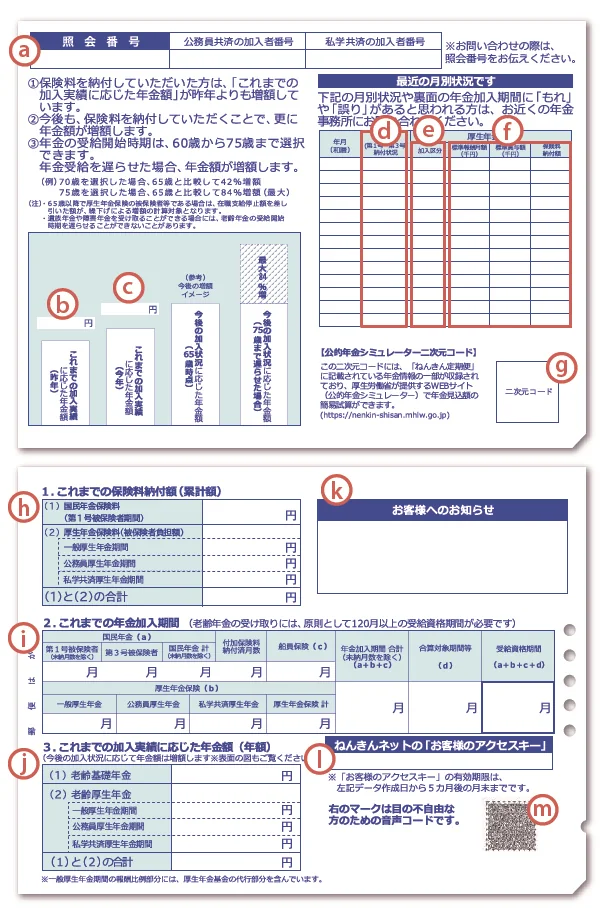
If you have been working in Japan for 3 years or less, the letter usually gives a simpler two-page summary, showing your total contribution months and an estimate of what you have paid so far. If you have been enrolled longer, the letter includes more detail, including an estimate of future pension benefits at retirement age. For most foreign workers planning to leave Japan and claim the lump-sum instead of waiting decades for an ongoing pension, that future estimate is not the relevant part of the letter. The contribution history is.
Why this letter matters more than your payslip
Your payslip shows what was deducted that specific month. The Nenkin Teikibin shows what the pension office has on file as actually received and recorded. These two numbers should match, but they do not always. A company error, a late filing by your employer, or a gap during a job change can create a difference between what you think you paid and what is officially on record.
Checking your payslip alone only tells you what should have happened, according to your employer’s own paperwork. The Nenkin Teikibin, or its online equivalent on Nenkin Net, tells you what the pension office itself says actually happened. When the two disagree, the pension office’s record is the one that counts when your lump-sum is eventually calculated.
A common source of confusion
Many workers see a lower standard monthly remuneration figure on their Nenkin Teikibin than they expect, and assume it is a mistake. Often it is not. Your figure is set based on your pay from a fixed review period, usually April through June, and that figure then applies for the following months regardless of whether your actual pay changes slightly in between. A quiet month with little overtime during the review period can set a lower figure for a long stretch afterward, even if you worked a lot of overtime later in the year.
What to do if something looks wrong
If a month is missing entirely, or your standard monthly remuneration looks far lower than it should for a period with heavy overtime or a raise, raise it with your employer first. Most differences come down to timing rather than an actual error. If your employer cannot explain the gap, or if a month of enrollment is simply missing with no explanation, the Japan Pension Service can confirm your official record directly, and this is worth doing before you leave Japan rather than after.
If you never received one
Some workers in Japan only a short time, or who moved address without updating the pension office, never actually receive a Nenkin Teikibin, even though they are enrolled and paying normally. This does not mean your contributions are not being recorded. It usually means the letter has nowhere correct to be delivered to. If this applies to you, do not wait for the next one to arrive. Register for Nenkin Net instead, confirm your registered address is current, and check your history directly online rather than relying on post that may never reach you.
In short
- The Nenkin Teikibin arrives once a year, in your birthday month, and lists your real contribution history, not an estimate.
- It shows your enrollment periods and your standard monthly remuneration, the figure used to calculate your refund later.
- It can differ from your payslip if there was a company error, a late filing, or an unreported gap between jobs.
- A lower figure than expected is often about timing, not a mistake, since your remuneration is set once a year from a fixed review period.
- Nenkin Net gives you the same information online, any time, without waiting for the letter to arrive by post.
Looked at your Nenkin Teikibin and the numbers do not add up? Use our pension refund estimator, or send us a photo of the letter and we will help you make sense of it, for free.